Analyzing Engagement Metrics Across Cultures to Inform Distribution Choices
Written by Rafael Albrecht · May 26, 2026
Analyzing Engagement Metrics Across Cultures to Inform Distribution Choices
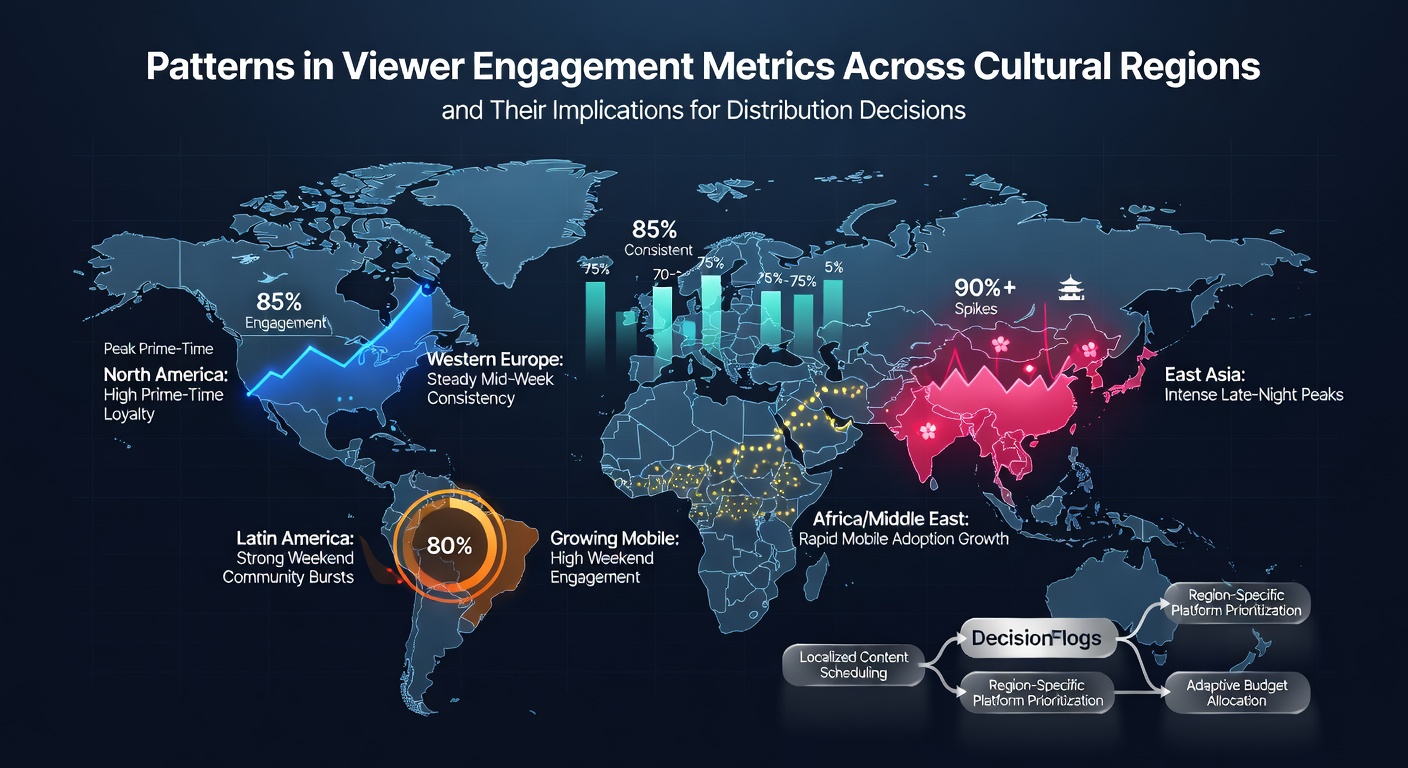
Viewer engagement metrics such as completion rates, average watch time, and social shares reveal distinct patterns when examined across cultural regions, and these variations directly shape how studios and platforms approach distribution decisions. Data collected from streaming services and theatrical releases shows that audiences in East Asia often maintain higher completion rates for serialized content while viewers in Western Europe tend toward shorter session lengths with more frequent returns. Such differences emerge consistently in reports compiled over multiple years and they influence release timing, platform prioritization, and localization investments.
Research from academic institutions highlights how collectivist cultures in parts of Asia correlate with elevated repeat-viewing figures, whereas individualist markets in North America and Australia demonstrate stronger initial spikes followed by quicker drop-offs. These observations come from aggregated user data across major services and they provide concrete benchmarks for executives planning global rollouts. In May 2026 analysts noted a noticeable uptick in cross-regional comparisons following new reporting standards adopted by several international trade groups.
Key Metrics That Vary by Region
Completion rates stand out as one of the most reliable indicators because they capture sustained attention rather than fleeting clicks. Studies conducted in South Korea and Japan frequently report figures above 75 percent for locally produced dramas, while comparable titles in Latin American markets show rates hovering between 55 and 65 percent unless strong word-of-mouth campaigns extend engagement windows. Average watch time per session follows a similar split, with European data often reflecting shorter but more numerous interactions throughout the week.
Social sharing metrics add another layer because they reflect cultural attitudes toward public endorsement. Observers note that audiences in Brazil and Mexico generate higher per capita shares on messaging platforms, which in turn accelerates algorithmic promotion on regional feeds. In contrast, Northern European markets produce steadier but lower-volume recommendations that rely more on review aggregation sites than real-time posts.
Geographic Patterns in Viewer Behavior
East Asian territories exhibit pronounced loyalty to franchise extensions, where engagement climbs steadily across sequels and spin-offs. This pattern supports staggered release calendars that space out installments to maintain momentum without saturation. Meanwhile data from the Middle East indicates strong performance for event-based content tied to holidays or sporting calendars, prompting distributors to align theatrical windows accordingly.
European markets display clear distinctions between Northern and Southern preferences, with Scandinavian viewers favoring minimalist storytelling that rewards high rewatch value while Mediterranean audiences respond more readily to ensemble casts and episodic structures. These trends appear in longitudinal datasets maintained by industry research bodies and they guide decisions about dubbing versus subtitling budgets.
Implications for Distribution Planning
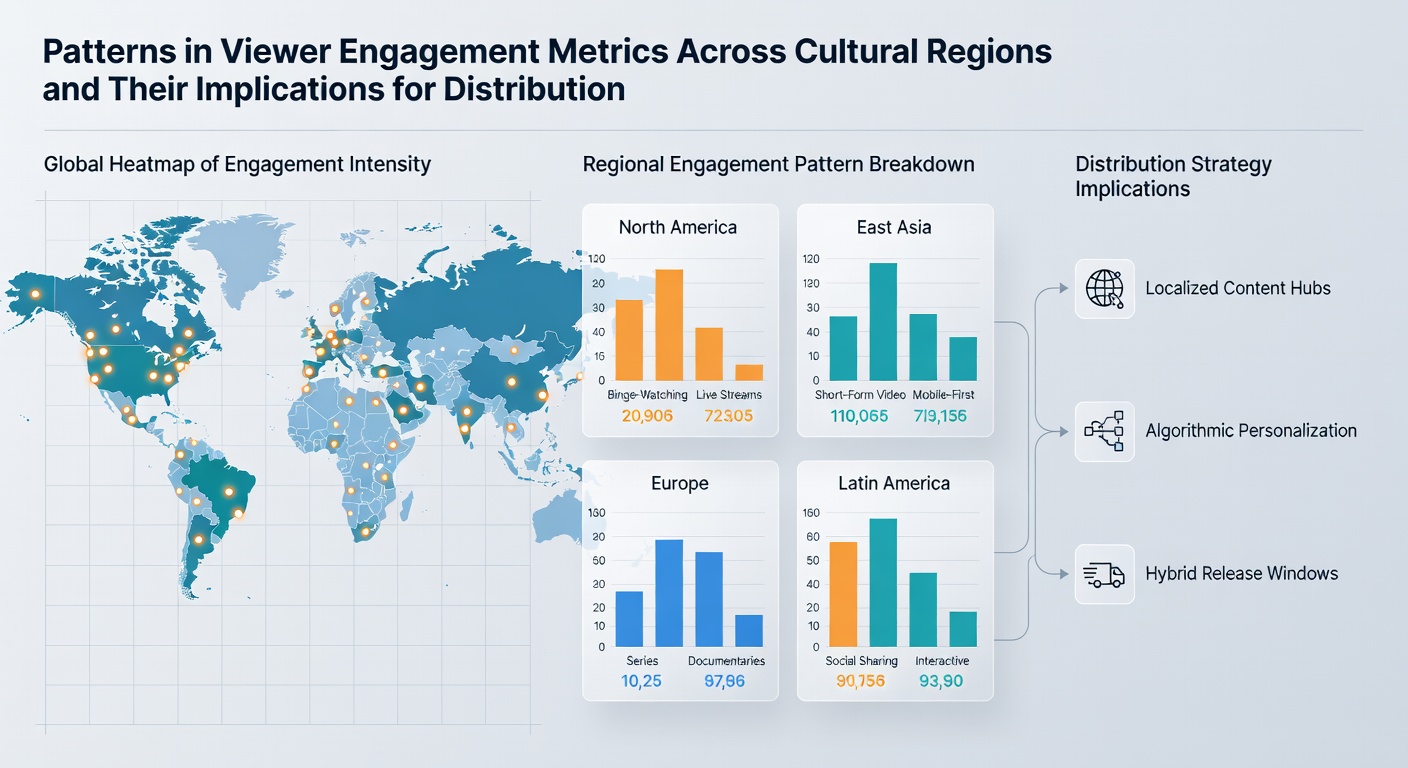
Distribution teams adjust release sequences based on these regional signatures because early engagement data predicts long-term revenue curves. When metrics indicate rapid saturation in one territory, resources shift toward markets where sustained interest allows extended marketing cycles. This approach reduces simultaneous competition across time zones and maximizes available promotional windows.
Platform prioritization also evolves from the data. Services operating in high-completion regions invest more heavily in recommendation algorithms that surface related titles, whereas markets with fragmented attention receive greater emphasis on push notifications and curated playlists. Canadian statistical reports have documented similar adjustments in domestic audiovisual exports, confirming that localized strategy tweaks improve retention across borders.
Case Examples from Recent Releases
One studio tracked a science-fiction series that achieved 82 percent completion in select Asian territories yet only 48 percent in parts of Europe during its initial month. The discrepancy prompted a revised marketing push that emphasized shorter highlight reels rather than full-episode trailers for the lagging regions. Subsequent quarters showed measurable lifts in session frequency without altering the core content.
Another example involves a Latin American comedy that generated unusually high social amplification in its home markets. Distributors responded by accelerating availability on secondary platforms in neighboring countries, capitalizing on organic momentum rather than relying solely on paid advertising. Such responsive tactics now appear more frequently in planning documents issued by major conglomerates.
Conclusion
Patterns in viewer engagement metrics across cultural regions continue to refine how distribution decisions unfold because the numbers supply actionable signals rather than vague impressions. Companies that integrate these insights into release calendars, localization priorities, and platform strategies position themselves to capture longer revenue tails while minimizing wasted spend. Ongoing data collection through 2026 and beyond will likely sharpen these models further as measurement tools become more granular across additional territories.