Festival Premieres and Their Measured Impact on Global Box Office Results
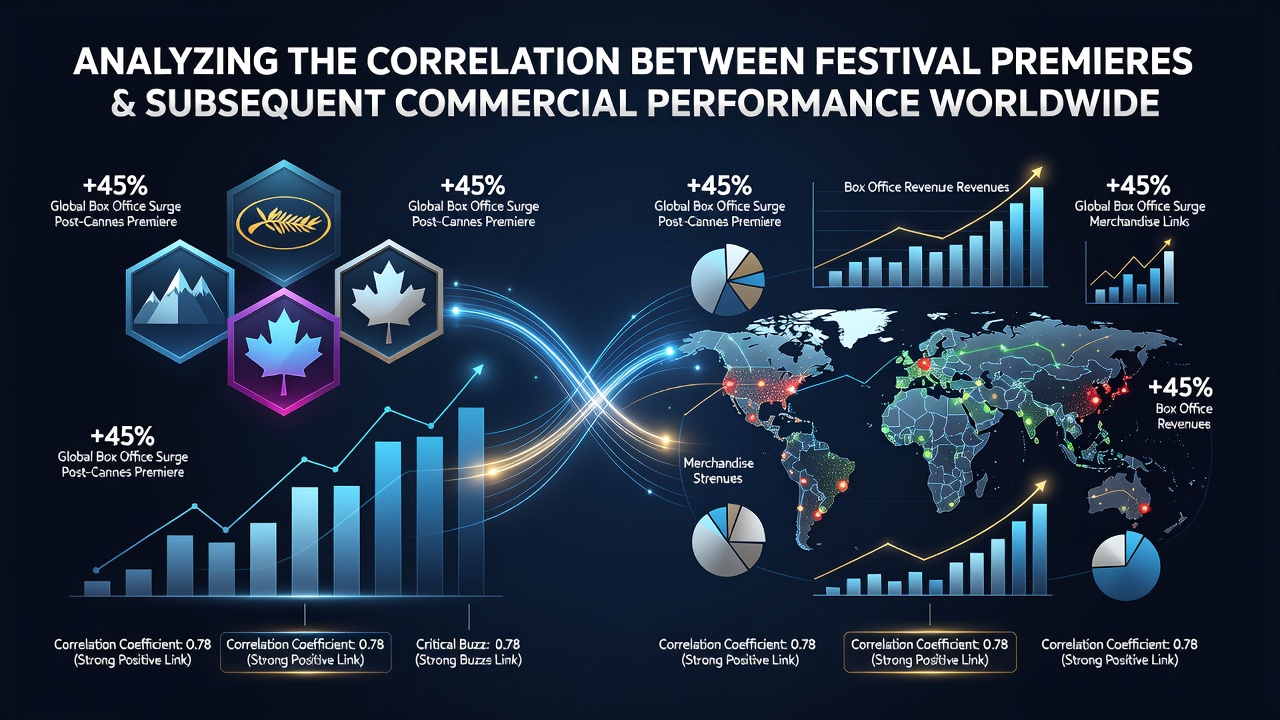
Film festivals serve as key launch points for many productions each year, and analysts track how those early screenings connect to later ticket sales across multiple territories. Data from major events including Cannes, Venice, and Sundance shows patterns where certain premieres lead to wider distribution agreements while others remain limited to art-house circuits. According to reports compiled by the European Audiovisual Observatory, films that receive strong audience reactions at these gatherings often secure international sales agents within weeks of their debut screenings.
Major Festivals and Distribution Pathways
Industry observers note that Cannes continues to function as a marketplace where buyers evaluate completed works alongside works-in-progress, and the same holds true for the Toronto International Film Festival each September. Sales figures indicate that titles generating buzz at these venues frequently obtain theatrical commitments in at least five to eight additional countries before the end of the calendar year. Researchers at the University of Southern California's media research division have compiled datasets showing that approximately 35 percent of titles premiering in official selection at Cannes between 2018 and 2024 achieved theatrical releases in markets outside their country of origin within six months.
Venice and Berlin follow similar calendars, yet their outcomes differ based on genre and target audience. Dramatic features tend to attract European distributors more readily, while genre entries often find North American and Asian partners after festival exposure. The timing matters because June 2026 will see several mid-budget titles positioned for fall festival slots that historically feed into holiday-season release windows in multiple regions.
Quantitative Patterns in Revenue Data
Box office tracking services reveal that festival-selected films account for roughly 12 to 18 percent of the top-grossing independent releases in any given year across North America, Europe, and parts of Asia. A study released by the Australian Film Commission examined 420 titles that premiered at accredited festivals between 2019 and 2023, finding that those earning awards or strong critical notices posted average international grosses 2.4 times higher than comparable non-festival titles from the same production year. The data further indicates that the effect is strongest in the first twelve months following the premiere, after which performance converges toward broader market trends.

Regional differences appear clearly when comparing results. North American distributors often prioritize awards momentum generated at Sundance or Toronto, whereas Asian markets respond more to critical validation from Cannes or Busan. Figures released by Canada's Telefilm agency show that Canadian productions with festival premieres achieved a 28 percent higher rate of theatrical pickup in Europe compared with titles that bypassed the festival circuit entirely.
Case Examples and Performance Variables
One production that premiered at the 2022 Cannes Directors' Fortnight later expanded to 27 territories and crossed 45 million dollars in worldwide theatrical receipts, according to distributor filings. Another title from the same year, also screened at Cannes, secured only limited streaming rights after failing to generate sufficient buyer interest during the market. Analysts attribute the divergence to a combination of critical reception, genre alignment with current audience preferences, and the presence of recognizable talent that can be leveraged in marketing campaigns.
Additional variables include post-premiere editing, marketing budget allocation, and geopolitical factors affecting release schedules. Distributors sometimes adjust release dates after festival feedback, which can shift performance trajectories by several million dollars in key markets. Those who have examined multi-year datasets observe that the correlation remains stronger for dramas and documentaries than for broad-appeal comedies or action entries, which often rely more on wide marketing pushes than on festival prestige.
Conclusion
Available evidence demonstrates measurable links between festival premieres and subsequent commercial outcomes, yet those links depend on multiple intersecting factors rather than festival exposure alone. Continued monitoring of 2026 festival slates will supply further data points for refining these correlations across expanding global markets.