Pre-Release Marketing Strategies and Their Impact on Post-Opening Box Office Performance in Major Film Releases
Written by Iris Hughes · Jun 18, 2026
Pre-Release Marketing Strategies and Their Impact on Post-Opening Box Office Performance in Major Film Releases
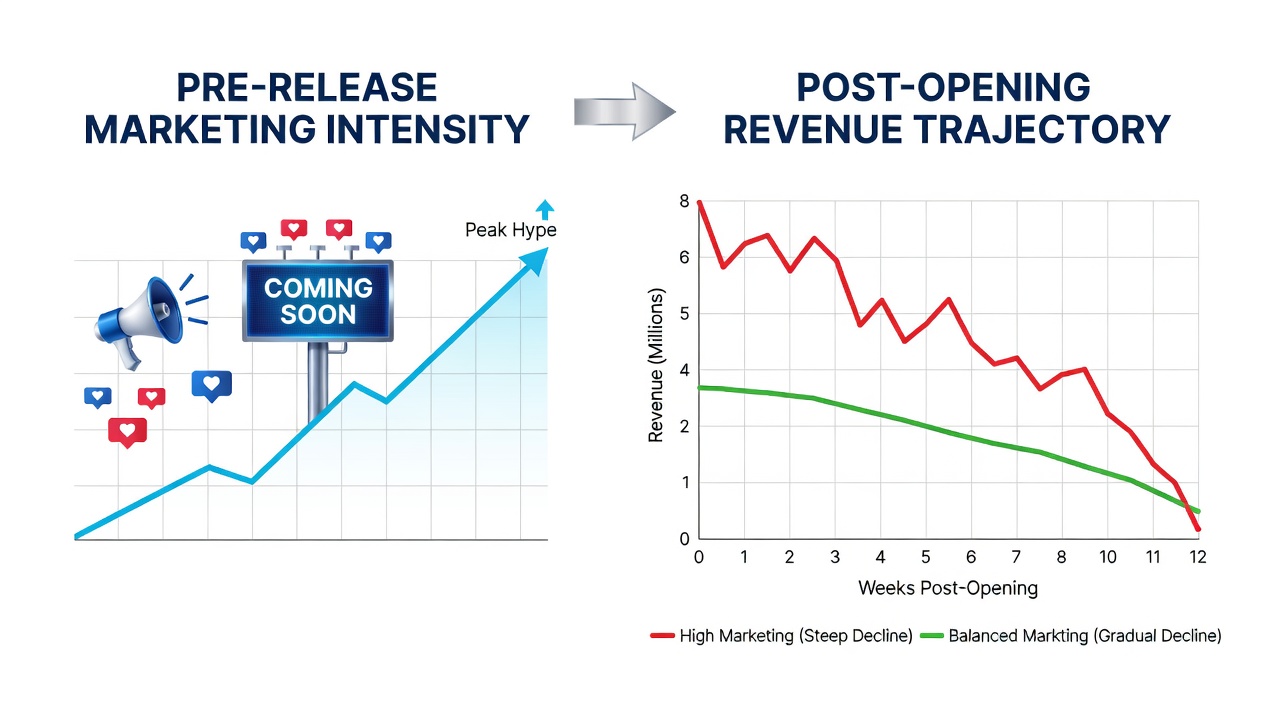
Pre-release marketing campaigns shape how audiences discover and commit to major film releases, and data from recent years shows measurable effects on revenue patterns after opening weekends. Campaigns typically include trailers, social media pushes, partnerships, and press events that build anticipation weeks or months ahead of a debut. Those who've studied box office records note that stronger pre-release visibility often correlates with higher opening numbers, yet the subsequent decline curves vary based on how sustained the interest remains.
Building Awareness Through Coordinated Campaigns
Studios allocate significant budgets to pre-release efforts, and figures reveal that these investments frequently drive initial ticket sales. Trailers released on platforms like YouTube generate millions of views, while tie-ins with brands extend reach into everyday consumer spaces. Observers note that films with multi-platform campaigns tend to achieve broader name recognition before tickets go on sale, which influences the size of the opening weekend audience. In June 2026, several tentpole releases followed this pattern, where early teaser campaigns aligned with merchandise drops and influencer content to maintain momentum through the summer slate.
Research from the Motion Picture Association highlights how integrated marketing plans affect audience turnout across different demographics. Campaigns that layer digital ads with traditional media create multiple touchpoints, and this repetition reinforces awareness. Those who've examined release schedules find that timing matters, since staggered reveals keep the title in public conversation without overwhelming potential viewers.
Opening Weekend Performance and Early Revenue Spikes
Major releases often see the bulk of their domestic earnings concentrated in the first few days, and pre-release marketing plays a direct role in that concentration. When campaigns generate high anticipation, opening weekend figures can exceed projections by substantial margins. Data shows that films backed by extensive teaser campaigns frequently post stronger per-theater averages, which sets the baseline for how quickly revenue begins to taper afterward. Analysts track these patterns through daily reporting services, and the numbers indicate that marketing intensity correlates with the magnitude of the debut.
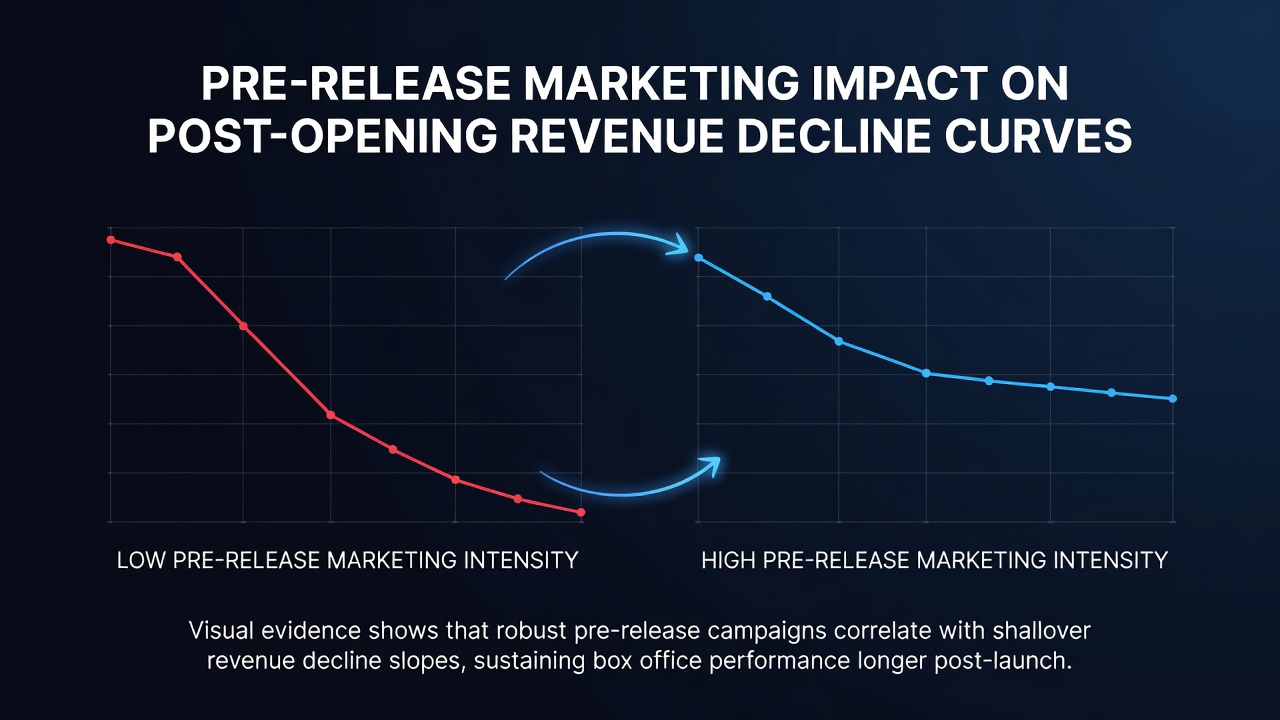
Yet the relationship extends beyond the opening frame. Campaigns that include early screenings or fan events create word-of-mouth that carries into subsequent weeks, and this can soften the rate of decline. Industry reports document cases where pre-release buzz translated into steadier attendance once reviews circulated, even if the initial spike was large.
Patterns in Post-Opening Revenue Decline
Revenue decline curves measure how quickly earnings drop after the opening weekend, and marketing strategies influence the steepness of those curves. Titles with heavy pre-release promotion sometimes experience sharper drops if the campaign oversold the experience, whereas balanced efforts that match content expectations tend to produce longer theatrical runs. According to a report by the European Audiovisual Observatory, films with diversified pre-release channels showed more varied holdover performance across international markets, where cultural differences affect how long audiences remain engaged.
Take one release cycle where experts tracked social sentiment alongside ticket sales. Early marketing that emphasized spectacle drove strong openings, but follow-through content released closer to the debut helped moderate the drop-off in later weeks. Observers note that when campaigns include ongoing updates rather than a single burst, the decline trajectory flattens because secondary audiences enter the market at different times.
Multiple factors interact here. Genre conventions, competition from other releases, and external events all intersect with marketing reach. Data indicates that pre-release efforts focused on core fan bases can accelerate the initial surge, while broader appeals help sustain attendance. Researchers at academic institutions have modeled these interactions, and their findings point to measurable differences in multiplier ratios between heavily marketed titles and those with lighter pre-release pushes.
Regional Variations and Sustained Performance
Global markets respond differently to the same campaign materials, and regional adaptation often determines how revenue holds after opening. Localized trailers and partnerships adjust messaging for cultural contexts, which can extend the revenue tail in territories outside the primary launch market. Figures from trade analyses show that campaigns synchronized across regions produce more consistent holdover numbers, whereas mismatched timing leads to quicker drop-offs in secondary markets.
Those who've reviewed international box office data find that pre-release digital campaigns travel faster than traditional media, allowing simultaneous awareness building. This simultaneity sometimes compresses the decline curve because audiences worldwide enter theaters on similar schedules rather than staggered ones.
Conclusion
Pre-release marketing campaigns establish the conditions for both opening performance and subsequent revenue trajectories in major releases. Available data demonstrates connections between campaign scope, opening strength, and the pace of decline, while regional and platform-specific adaptations introduce additional variables. Continued analysis of these patterns provides clearer insight into how promotional timing and content choices align with audience behavior across different release windows.