Regional Censorship Variations Drive Content Adaptations in Worldwide Film Distribution
Written by Quinn Wagner · Jul 18, 2026

Regional Censorship Variations Drive Content Adaptations in Worldwide Film Distribution
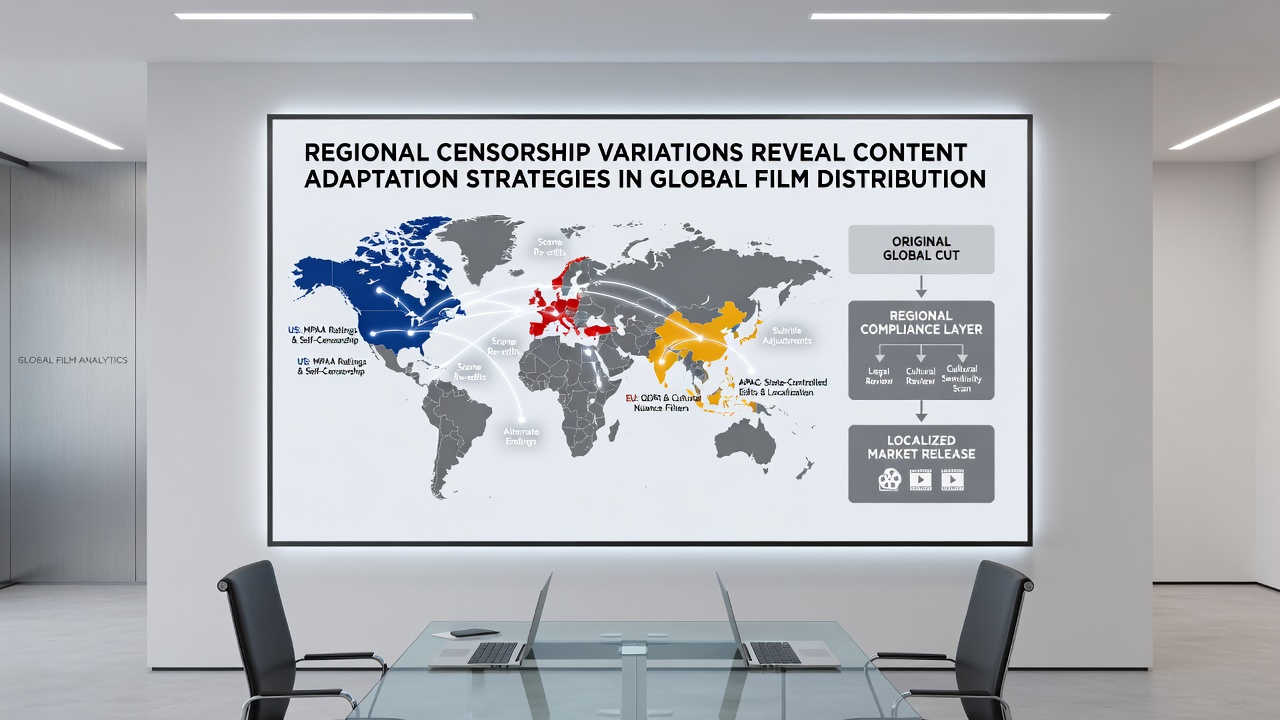
Regional censorship variations shape how studios prepare films for international release, and data from multiple markets shows consistent patterns of content modification to meet local standards. Studios often produce several versions of the same title, with adjustments ranging from minor edits to full scene replacements, because regulatory frameworks differ sharply across continents.
Key Regulatory Frameworks Across Major Markets
Classification systems operate under distinct rules in each territory. The United States relies on the voluntary MPAA rating system, which focuses on parental guidance categories, while China requires approval from the National Radio and Television Administration before any theatrical run can begin. European countries follow the European Audiovisual Observatory guidelines yet maintain separate national boards that apply their own criteria for violence and sexual content. Australian classification authorities and Canadian provincial boards add further layers of review that distributors must navigate before finalizing release prints.
These differences lead distributors to prepare alternate cuts well in advance of scheduled premieres. Research from the University of Southern California’s Annenberg Inclusion Initiative indicates that films targeting multiple territories undergo an average of three distinct editing passes to satisfy varying thresholds for profanity, nudity, and political references.
Common Adaptation Techniques in Practice
Studios employ several established methods to align content with local expectations. Digital removal of specific objects or gestures occurs frequently in markets with strict rules on religious imagery. Dialogue replacement through dubbing or subtitle modification addresses political sensitivities without altering visual footage. In some cases, entire subplots receive re-filming for particular regions when core story elements conflict with prevailing standards.
One production team working on a 2025 action title created four separate endings to accommodate requirements in East Asian markets. The process involved coordination between post-production houses in Los Angeles and local compliance consultants who flagged dialogue lines referencing historical events. Such parallel workflows have become standard since streaming platforms expanded simultaneous global releases.
Impact on Release Timelines and Revenue Allocation
Delays tied to censorship reviews affect revenue projections in multiple territories. When a film requires substantial re-editing, release dates shift by weeks or months, which in turn influences marketing spend and theatrical window strategies. Industry reports compiled by the Motion Picture Association show that titles facing extensive modifications in two or more key markets experience measurable changes in opening weekend performance compared with versions released without alteration.
July 2026 brings new classification updates in several Southeast Asian countries that will require additional documentation for films containing supernatural themes. Distributors have already begun mapping these forthcoming requirements against upcoming slates to avoid last-minute revisions. The adjustments include revised rating descriptors and mandatory on-screen warnings that must appear in local languages.
Technology Supporting Content Localization
Artificial intelligence tools now assist editors in identifying potentially restricted material during early assembly stages. These systems scan scripts and rough cuts against databases of previously flagged elements from past releases. Human reviewers still conduct final checks because algorithmic suggestions require contextual judgment that current technology cannot fully replicate.
Cloud-based collaboration platforms allow teams in different time zones to review proposed changes simultaneously. A studio working on a science-fiction release used this approach to secure approvals from regulators in Canada and Australia within the same production cycle, shortening the overall post-production timeline by nearly three weeks.
Case Examples from Recent Releases
Observers note that historical dramas frequently encounter the widest range of required edits. One 2024 title about wartime events received cuts to battle sequences in one market while facing dialogue adjustments in another. The same film played in its original form in territories with fewer restrictions on graphic content. These variations demonstrate how single productions generate multiple commercial versions to reach the broadest possible audience.
Animated features encounter fewer visual edits yet still require script modifications for cultural references that do not translate across borders. Music and sound effects sometimes receive replacement tracks when original compositions reference restricted symbols or events. Data collected by trade organizations shows that animation studios allocate dedicated localization budgets comparable to those of live-action productions.
Conclusion
Regional censorship variations continue to influence every stage of global film distribution, from script development through final delivery. Studios maintain detailed compliance matrices that track requirements across dozens of territories, and these records guide decisions about which markets receive which version of each title. As regulatory environments evolve, adaptation strategies will likely incorporate more automated tools while retaining human oversight for nuanced content decisions. The pattern of preparing multiple cuts remains a core element of international release planning.