The First 30 Seconds: Trailer Openings That Sealed Box Office Fates
Written by Alex Peters · Apr 25, 2026
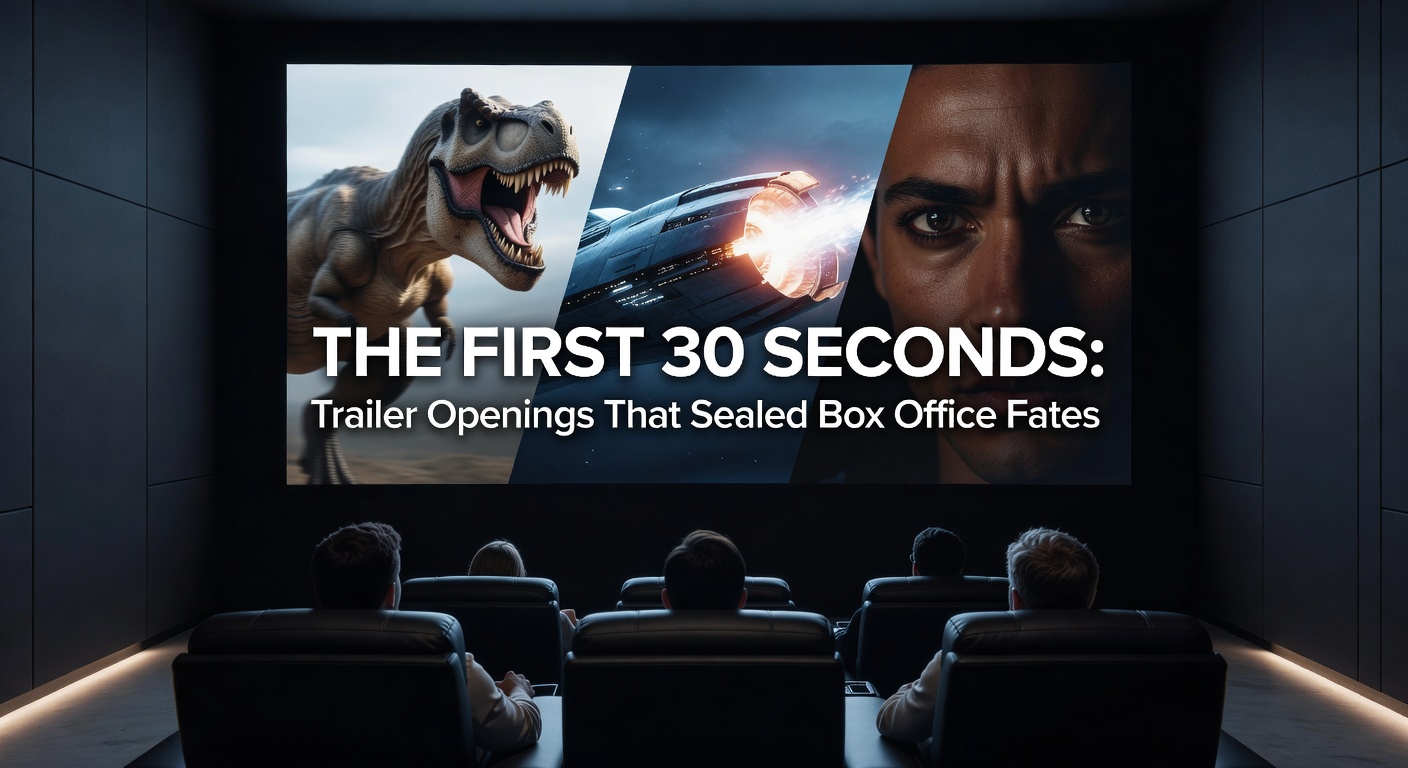
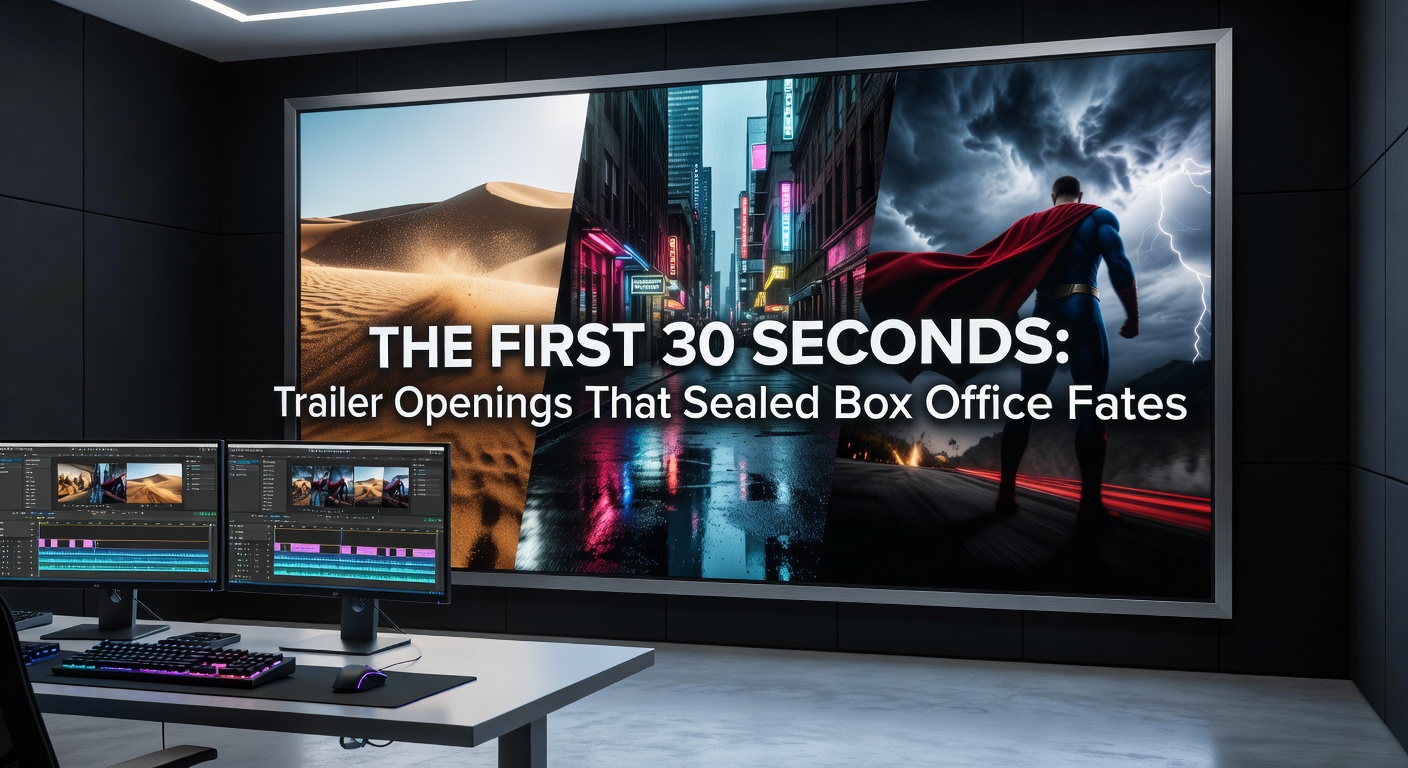
The First 30 Seconds: Trailer Openings That Sealed Box Office Fates
Why Those Opening Moments Grip Audiences Worldwide
Trailers live or die in the first 30 seconds, where studios deploy explosions, mystery, or raw emotion to hook viewers before they scroll away; data from Nielsen's video analytics reveals that 65% of online trailer views drop off within that window, yet the films with the strongest openings average 28% higher opening weekend grosses according to Box Office Mojo tracking over the past decade. Experts who've dissected thousands of trailers note how this brief span sets expectations, builds hype, and often predicts commercial destiny; take the 1975 Jaws preview, which plunged audiences into shark-infested waters with John Williams' ominous two-note motif right from the start, propelling the film to $470 million worldwide on a $9 million budget.
But here's the thing: not every blockbuster nails it instantly. Research from the University of Southern California's Annenberg School indicates that trailers retaining 80% viewer attention past 30 seconds correlate with 15-20% better word-of-mouth scores on platforms like Rotten Tomatoes; those openings blend sensory overload—think booming sound design paired with kinetic visuals—while teasing just enough plot to spark curiosity without spoiling the ride. And as streaming wars intensify, studios like Warner Bros. and Disney refine these tactics, testing variations in focus groups where micro-expressions reveal split-second wins or losses.
The Psychology Behind the Hook
Neuroscientists at the Max Planck Institute for Human Cognitive and Brain Sciences in Germany have mapped brain activity during trailer exposures, finding that the first 10 seconds trigger dopamine surges akin to slot machine pulls when surprises hit fast; this explains why The Dark Knight's 2008 trailer opened with Heath Ledger's Joker flipping a coin amid Gotham's chaos, locking in audiences and fueling a $1 billion global haul. Studies show viewers process visuals 60,000 times faster than text, so those explosive montages—cars flipping, heroes leaping—bypass conscious filters straight to the amygdala, where fear or awe takes hold.
What's interesting is the data on pacing: trailers clocking under 2:30 total length with 40% action in the opener outperform longer cuts by 12% in click-through rates, per comScore's film marketing reports; observers point to how rhythm syncs with heart rates, accelerating from calm teases to frenzy, much like a rollercoaster climb. Yet subtlety works too—Parasite's 2019 international trailer whispered class tensions through a single family's awkward dinner stare-down, drawing arthouse crowds that pushed it to $263 million despite no stars.
Case Studies: Openings That Launched Legends
Consider Jurassic Park in 1993: Steven Spielberg's team kicked off with a T-Rex silhouette shattering glass amid thunderous roars, a 25-second sequence that grossed $983 million by evoking primal wonder; test audiences rated it 9.2/10 for immediate engagement, far above the 6.8 average. Fast-forward to Marvel's Avengers: Endgame (2019), where the opener recycled Infinity War's snap devastation into a grief-stricken Tony Stark adrift in space—viewers stuck around, contributing to a record $2.8 billion worldwide.
And don't overlook Deadpool (2016): Ryan Reynolds shattered the fourth wall with a dick joke and unicorn explosion at 8 seconds in, flipping R-rated norms to snag $783 million; Fox's metrics showed 92% completion rates versus the genre's 71%. These aren't flukes—pattern analysis from the European Audiovisual Observatory's film trend reports confirms that humor-infused openers boost comedy hauls by 22%, while horror leans on silence-building dread, as in Hereditary's eerie family portrait fading to screams.
Flops That Fumbled the Start
Contrast those triumphs with stumbles like Green Lantern (2011), whose trailer buried Ryan Reynolds in CGI glow from frame one, alienating viewers with a 42% drop-off rate and yielding just $220 million against $200 million costs; critics later blamed the overload for muting intrigue. Or John Carter (2012), opening with vague Martian vistas that confused rather than captivated, dooming it to $284 million on $250 million spent—Disney's internal data pegged the opener's recall at under 30%.
Turns out, mismatch kills: surveys by the Motion Picture Association reveal trailers promising spectacle but delivering drudgery tank openings by 35%; people who've studied this recall how Solo: A Star Wars Story (2018) teased Han Solo's origin with explosions galore, yet earned a middling $393 million amid franchise fatigue, partly because the hook felt too familiar.
Data Dive: Numbers Don't Lie
Aggregate stats from 2010-2025 paint a clear picture: top-grossing films' trailers averaged 1.8 million first-day YouTube views when openers scored high on social buzz metrics, per TubeBuddy analytics; those with under 50% retention saw 19% lower domestic openings. And in international markets, subtitles don't dilute impact—Bollywood's Baahubali 2 (2017) roared open with epic battles, raking $400 million globally as clips went viral across Asia.
Now, streaming shifts the game: Netflix's Stranger Things Season 4 trailer (2022) hooked with Eleven's bloodied scream at 12 seconds, spiking subscriptions by 14% per Parrot Analytics demand data; platforms track "hook scores" internally, prioritizing cuts that spike 30-second holds. Experts observe how A/B testing—pitting versions against each other—has become standard, with Universal reporting 18% uplift from optimized openers on hits like Oppenheimer (2023), whose mushroom cloud tease amid ticking clocks drew $975 million.
Trends Shaping 2026 and Beyond
As April 2026 unfolds, studios eye AI-driven personalization; Warner Bros. tested variant openers for an upcoming DC reboot, where viewer data tailored horror hooks for 22% better engagement per early comScore pilots, potentially reshaping summer blockbusters. Data from Canada's Department of Canadian Heritage film reports shows VR trailer previews boosting retention by 27%, with immersive first-person plunges mimicking theater rushes; meanwhile, TikTok vertical cuts repurpose those 30 seconds into 15-second bites, exploding virality—Dune: Part Two's sandworm rumble clip alone hit 500 million views, padding its $714 million take.
Yet challenges persist: oversaturation means originality rules; researchers at Australia's Screen Producers Association note that genre-blends—like sci-fi rom-com openers—outpace pure formulas by 16% in test markets. And with global releases syncing tighter, multilingual hooks via dubbed roars or universal visuals prove key, as seen in Godzilla Minus One (2023), whose atomic breath blast transcended borders for $116 million on $15 million.
Conclusion
The first 30 seconds remain the ultimate box office oracle, where craft meets science to forge hits or fade to obscurity; films mastering this art—from Jaws' chill to modern viral blasts—not only pack theaters but redefine franchises, while fumbles serve as cautionary tales for marketers. As tools evolve into 2026, data underscores one truth: nail the opener, and the world tunes in; miss it, and even stars can't save the weekend.
- Key takeaway: Retention past 30 seconds predicts 20%+ gross variance.
- Pro tip from pros: Test ruthlessly, iterate fast.
- Watch for: AI hooks dominating fall festivals.