Tracing Film Income Streams: Low-Key Promotions Compared to Social Media Explosions
Initial Release Strategies Shape Long-Term Earnings
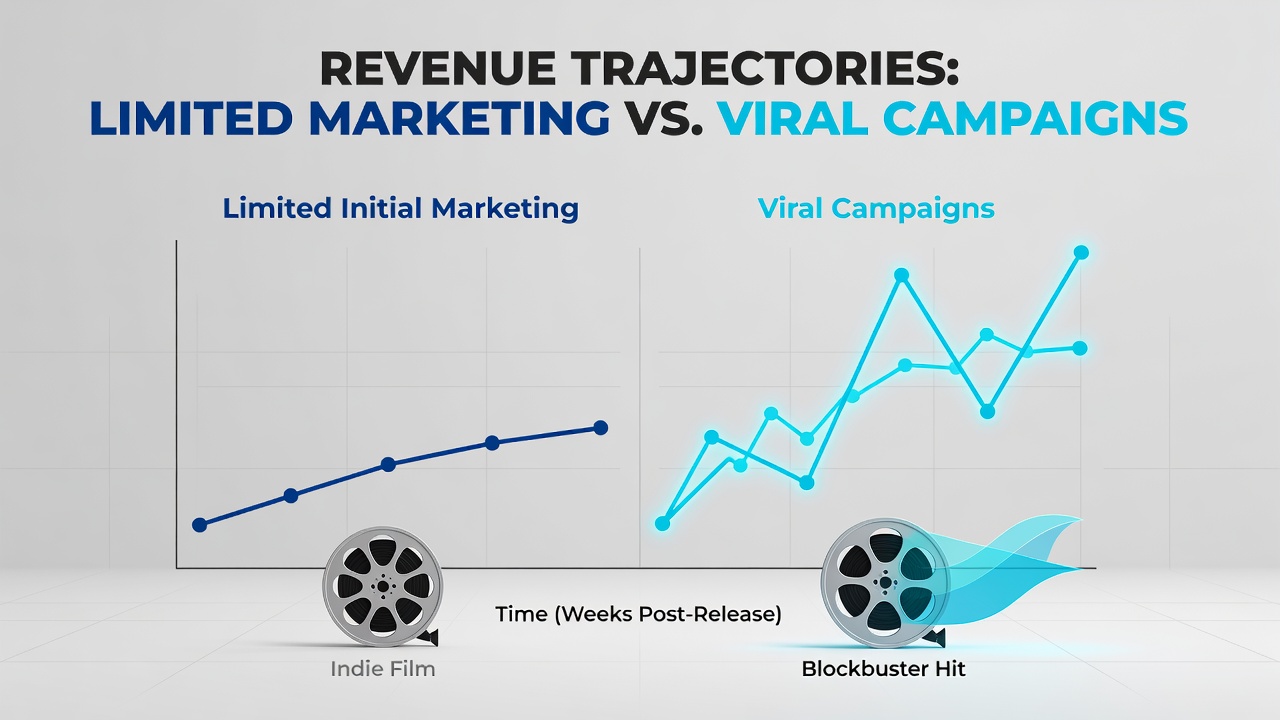
Revenue trajectories for motion pictures often diverge sharply depending on whether studios rely on restrained promotional budgets or harness organic online momentum, and data from industry trackers shows how these paths unfold across theatrical windows, streaming releases, and ancillary markets. Limited initial marketing typically involves targeted festival screenings, modest print advertising, and word-of-mouth cultivation, whereas viral campaigns leverage user-generated content, influencer shares, and platform algorithms to accelerate awareness. Observers note that both approaches produce distinct patterns in box office accumulation and downstream revenue, particularly when examined through 2025 and into July 2026 figures released by global tracking services.
Patterns in Limited Marketing Releases
Films launched with constrained promotional spending frequently build revenue through gradual audience expansion rather than opening weekend spikes, and case studies compiled by academic researchers highlight titles that sustained earnings over multiple weeks in secondary markets. One study from a Canadian university examined independent features that allocated under 15 percent of total budget to pre-release advertising, finding that sustained festival circuit exposure correlated with extended theatrical runs in regional theaters. Those who've analyzed European box office records observe similar trends where word-of-mouth referrals drive incremental ticket sales long after initial screenings, creating steadier but lower peak revenue curves compared to wide releases.
Ancillary income streams such as video-on-demand and international licensing often compensate for modest theatrical starts in these scenarios, and figures from the European Audiovisual Observatory indicate that limited-marketing productions recovered 40 to 60 percent of costs through post-theatrical windows during 2024-2025 cycles. This trajectory contrasts with high-spend campaigns that front-load earnings but risk sharper drop-offs once novelty fades.
Viral Campaign Dynamics and Accelerated Growth
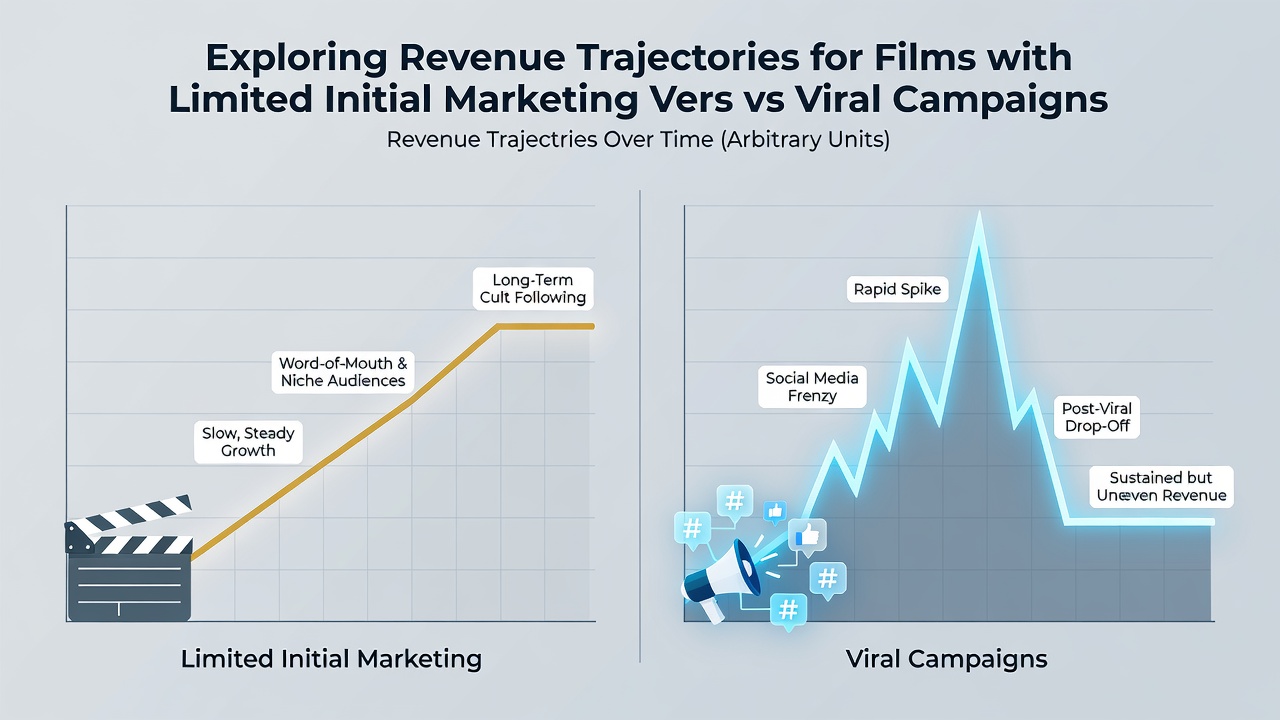
Viral campaigns generate revenue curves marked by rapid early acceleration followed by variable tail periods, and platform analytics reveal how social media shares can multiply opening weekend attendance by factors of three to five in select markets. Titles that ignite user discussion on short-form video networks demonstrate front-loaded domestic grosses that sometimes exceed projections by wide margins, yet researchers tracking global data note that international markets may lag unless localized adaptations extend the conversation. By July 2026, several mid-budget productions had leveraged algorithmic boosts on major platforms to achieve cumulative worldwide totals surpassing those of traditionally marketed peers with comparable production scales.
Long-term sustainability appears tied to content resonance rather than initial volume of shares, and industry reports document cases where early virality translated into enduring streaming library performance years later. Data indicates that films riding viral waves often secure higher licensing fees in subsequent windows because audience metrics remain elevated, creating compounding effects across multiple revenue phases.
Comparative Revenue Accumulation Over Time
When placed side by side, limited-marketing films tend to exhibit flatter but more consistent accumulation lines, while viral examples display steeper initial climbs that may plateau or decline depending on cultural staying power. Trade analyses from Australian screen agencies show that productions without heavy upfront spend sometimes reach profitability thresholds later in their lifecycle through catalog sales and merchandise extensions. In contrast, viral successes frequently recoup costs within the first quarter of release yet require ongoing engagement to maintain ancillary momentum.
Geographic variations further differentiate outcomes, and observers tracking Asia-Pacific markets report that limited-marketing titles gain traction through local partnerships whereas viral phenomena spread faster across borders via digital channels. These differences underscore how initial strategy influences not only peak figures but also the shape of revenue curves across 18- to 36-month windows.
Conclusion
Revenue trajectories for films employing limited initial marketing versus viral campaigns reveal distinct timelines and recovery mechanisms, with available data illustrating how each path interacts with theatrical, streaming, and licensing phases. Patterns observed through mid-2026 continue to demonstrate that strategy selection affects both the speed and stability of income streams across global markets.