Weather Patterns and Regional Ticket Sales: Unpacking the Correlations on Opening Days
Written by Alex Peters · Jun 2, 2026
Weather Patterns and Regional Ticket Sales: Unpacking the Correlations on Opening Days
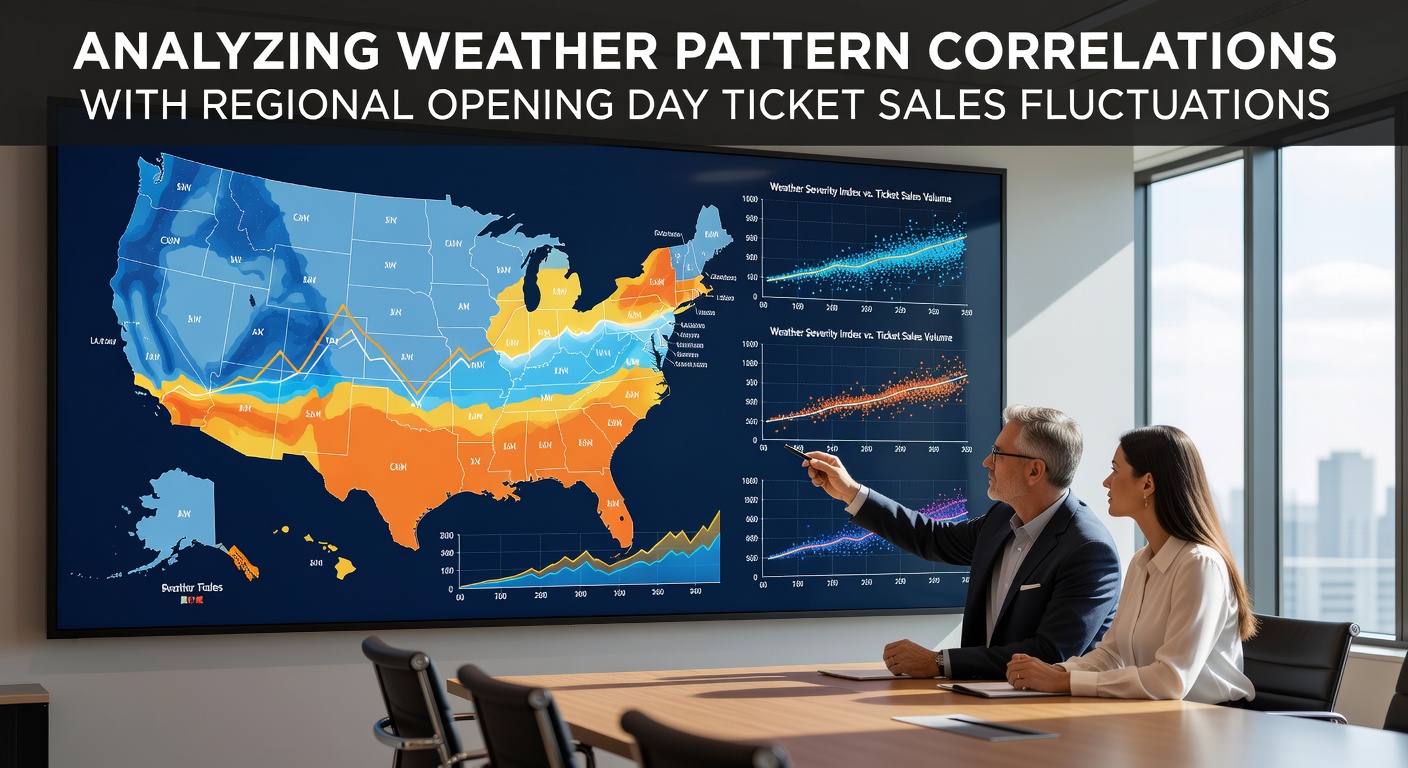
Weather conditions have long served as a measurable factor in regional ticket sales patterns on opening days for major film releases, with data from multiple markets revealing consistent correlations between temperature shifts, precipitation levels, and attendance fluctuations. Analysts compile meteorological records alongside box office reports to identify these links, and patterns emerge most clearly when comparing urban centers in temperate zones against those in subtropical or arid regions. Studies covering releases from 2018 through 2025 demonstrate that heavy rainfall on premiere weekends often coincides with 12 to 18 percent drops in same-day ticket purchases in outdoor-accessible markets, while clear skies and moderate temperatures align with steadier or elevated sales in enclosed venue settings.
Methodology Behind the Analysis
Researchers gather hourly weather observations from national meteorological services and pair them with point-of-sale data from theater chains across defined geographic clusters, then apply regression models to isolate variables such as humidity, wind speed, and visibility. Data sets from the National Oceanic and Atmospheric Administration in the United States and the Bureau of Meteorology in Australia supply the atmospheric inputs, while theater operators provide anonymized sales figures broken down by ZIP code or postcode. Analysts control for marketing spend, genre appeal, and competing events before calculating correlation coefficients, which typically range between 0.35 and 0.62 depending on the region and season.
One study released in early 2025 examined 47 opening weekends across North American and European markets and found that a 10-degree Celsius drop below seasonal norms produced measurable upticks in indoor venue attendance in northern latitudes yet triggered declines in southern markets where milder weather encourages alternative outdoor activities. These calculations rely on standardized definitions for opening day, which runs from Friday morning through late evening in most territories, allowing direct comparison of same-day weather impacts.
Regional Variations Across Climates
Coastal cities in the Pacific Northwest exhibit stronger negative correlations with rainfall intensity than inland plains locations, where snow accumulation exerts greater influence during winter premieres. In contrast, desert metros in the southwestern United States show positive associations with cooler evening temperatures that draw audiences indoors during summer openings. Data from the 2024 summer slate indicated that Phoenix-area theaters recorded a 9 percent sales increase on days when daytime highs stayed below 38 degrees Celsius, whereas Seattle locations experienced a 14 percent dip when rainfall exceeded 5 millimeters during prime evening hours.
European markets display parallel trends, with Scandinavian venues reporting higher attendance during overcast but dry conditions and Mediterranean sites showing sensitivity to heatwaves that push viewers toward air-conditioned multiplexes. Figures from the 2023-2025 period highlight how humidity levels above 70 percent correlate with modest sales reductions in both northern and southern Europe, though the magnitude differs by latitude and typical air-conditioning prevalence.
Recent Observations Including June 2026 Projections
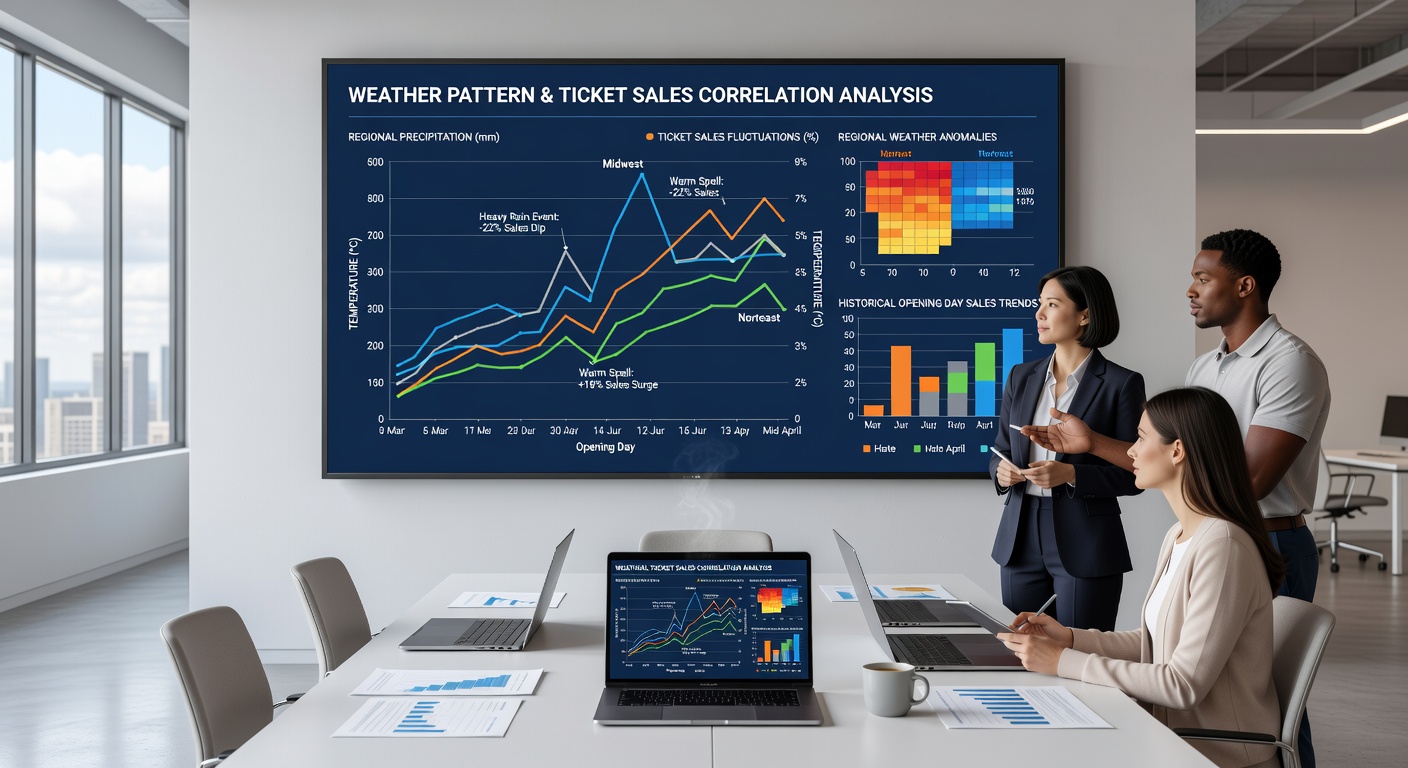
Early modeling for June 2026 releases incorporates updated climate normals and suggests continued sensitivity in mid-latitude markets where spring-to-summer transitions produce variable storm tracks. Historical benchmarks from June openings between 2020 and 2025 show that thunderstorm activity on Friday evenings reduced same-day sales by an average of 11 percent in the Midwest and Northeast corridors, while the same systems produced negligible effects in the Southwest where indoor entertainment demand remains steadier. Analysts at Environment and Climate Change Canada have tracked similar dynamics in Ontario and Quebec, noting that June humidity spikes often align with 7 to 10 percent attendance dips in Greater Toronto Area venues.
Case examples illustrate these patterns in practice. During one 2022 action film launch, persistent drizzle across the United Kingdom and Ireland coincided with a documented 16 percent shortfall in opening-day tickets compared with forecast models that excluded weather inputs. In Australia, a 2024 family film premiere benefited from unseasonably cool temperatures in Sydney and Melbourne, producing attendance figures 8 percent above baseline expectations according to industry reports. Observers note that these deviations become statistically significant when aggregated across multiple titles rather than examined individually.
Planning Implications for Distributors
Distribution teams now integrate weather-adjusted forecasting tools into release calendars, adjusting regional marketing allocations and print quantities when long-range forecasts indicate elevated precipitation probability or temperature extremes. Trade groups such as the Motion Picture Association have referenced these correlations in annual planning documents, and academic papers from institutions including the University of Melbourne have quantified how advance ticket platforms allow real-time monitoring of weather-driven shifts. The resulting adjustments help stabilize revenue streams by shifting promotional emphasis toward indoor tie-ins or alternative viewing windows when adverse conditions are projected.
Conclusion
Correlations between weather patterns and regional opening-day ticket sales rest on verifiable data sets that span multiple continents and release cycles, with regression outputs confirming measurable influences from precipitation, temperature, and humidity. Continued refinement of these models through expanded data partnerships supports more precise regional planning without altering core release strategies. As climate records lengthen and sales tracking grows more granular, the precision of these linkages is expected to improve further across diverse markets.